


The Fiddle Leaf Fig is a popular ornamental tree, proclaimed the “it” plant back in 2012. Ever since, this beautiful plant has been popular with indoor plant lovers, as well as design bloggers and Instagrammers.
Named after the fiddle instrument (violin) for its large, fiddle-shaped leaves, the Ficus Lyrata is an affirmation of good taste and refined aesthetic. This famous tree has even gained the Royal Horticultural Society’s Award of Garden Merit.
Today, you can find it taking prime position in bedrooms, home office spaces, and lounges all over the world. Homeowners and designers alike love the Fiddle Leaf Figs because they complement many interior styles, from minimalistic to industrial and boho-chic.
The Fiddle Leaf Fig is native to Africa where it grows in tropical warm and humid conditions. Nevertheless, it has been successfully introduced and cultivated in many parts around the world, including the West Indies, the Philippines, Nicaragua, and other countries where it adorns parks and gardens, as well and indoor spaces.
About the Fiddle Leaf Fig
- Lyrata is part of the Moraceae family which consists of approximately 40 genera and 1000 species of trees, shrubs, herbs, and lianas. Most of them have milky sap and grow in tropical or subtropical regions.
- Ficus is a large genus that is often cultivated for their fig fruits or decorative purposes.
- In 1916, F. Lyrata was reported to be present in most European Botanic Gardens, including Brussels, Berlin, and Kyiv.
- Lyrata can be a problem species in areas where it may compete with native flora due to its fast-growing rate and tendency to attach to nearby plants. However, it requires a special pollinator wasp to have viable seeds, and it can be kept under control by herbicides.
- The fiddle leaf fig can kill other plants, but only in the wild where it starts growing on the surface of other trees. Its roots eventually go down into the ground where they surround and strangle the host tree.
- Indoor fiddle leaf figs come from a nursery, so you don’t have to worry that your beloved house plant killed another so that it could thrive.
- It needs time to adapt. The Ficus Lyrata is a fabulous house plant, brightening up any dull corner in your house. However, it may need some time to adapt to a new environment, as it doesn’t like to move around a lot.
- The fiddle leaf likes consistent temperature and humidity levels.
- Your fiddle leaf can live for 25-50 years with proper care. Since they are pretentious and can be tricky to keep, most house plants don’t live that long.
- Due to its large leaves, the fiddle leaf is highly efficient at purifying the air and is a popular choice for indoor and office use.

Fiddle Leaf Fig Features: An Overview
- The fiddle leaf fig will grow moderately fast, reaching heights of up to 40 feet and extending up to 35 feet. Indoors, it can reach heights of around 10 feet.
- The size of the fiddle leaf fig can be controlled by using a small pot and by careful pruning.
- It is pretty resilient, being able to withstand a wide range of soil styles, including acidic, clay, alkaline, loam, and sand, as long as it’s well-drained.
- Native to the tropical and subtropical area, this plant thrives in high humidity levels. An indoor tree might start to look fatigued without proper humidity levels.
- The fiddle leaf fig grows in warm and wet regions, but it can be successfully grown indoors in temperate areas, where it normally remains shorter and does not flower or fruit.
- During warm periods with temperatures over 10 °C (50 °F), the plant can be placed outside.
- Although it is normally found in warm, wet surroundings, Ficus Lyrata has a high tolerance for drought and can grow in different lighting conditions such as partial sun, full sun, or partial shade.
- With the right conditions and care, the fiddle leaf fig will grow happily in your home.
- As an indoor plant, it will not bear any fruit or flowers. When grown outdoors, it will bear fruit, but unlike its cousin Ficus Carica, the common fig, they are not edible.
- If you have animals or children, you might want to keep the plant out of their reach. Their sap is mildly toxic to children and pets if consumed.
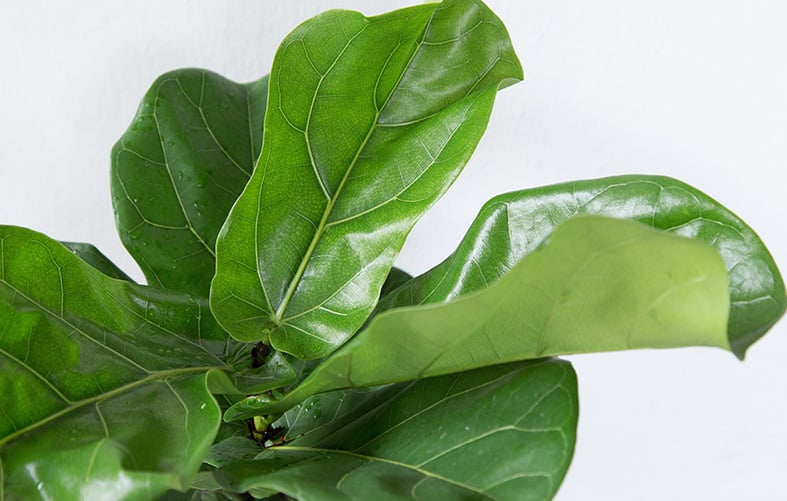
Growing Fiddle Leaf Fig
Your Fiddle Leaf Fig appreciates a warm, humid environment with plenty of light. It is best to place the pot away from drafts or air vents. The ideal location would be close by or in front of windows facing south or west. An eastern facing window could also work, as long as you place it directly in front of it to make sure it gets enough light.
To keep your fiddle leaf fig looking nice, make sure it receives 6 hours of direct sunlight per day. A plant with northern exposure will most likely not thrive. The safest bet is to place the plant directly in front of your window.
Fiddle leaf fig trees are sensitive to environmental changes, so don’t panic if they lose a few leaves once you move them into your home. Every three months, rinse the dust from their large leaves with room temperature water to make sure they can absorb more sunlight.
The most important thing to know about your fiddle leaf fig is that it likes to be well-drained, so a well-draining soil mix is essential. Choose a soil with chunky particles so that water can flow freely, such as a cactus and succulent soil mix.
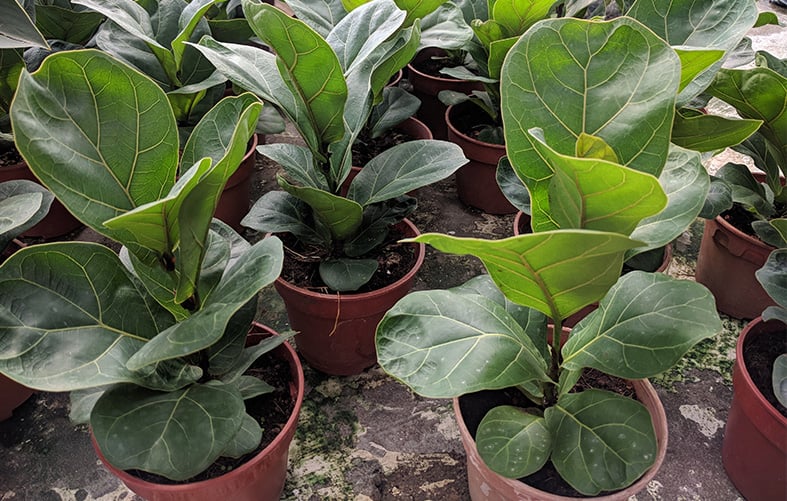
Add in an extra quarter of bark chips or another chunky substrate to make sure your plant is happy. Alternatively, you can make your soil mix with some high-quality potting mix (four parts), horticultural charcoal (one part), and pine bark mulch (one part).
Keep in mind that the soil we provide our plants with is not an endless source of nutrients. Throughout the growing season, normally in spring-summer, your fiddle leaf fig will need more resources to grow new leaves. During this period, use a diluted liquid fertilizer when you water the plant.
Pruning is also an important part of growing and caring for your fiddle leaf fig tree. Cutting back a few leaves will encourage healthy growth. Start by pruning the damaged leaves and cutting any crossing branches. Make sure your cuts are minimum one inch away from the trunk, to prevent any damage. To keep your tree strong and healthy, make it a habit to prune any overgrowth!

- STYLISH LIVE PLANT: Bring home a beautiful Fiddle Leaf Fig live plant for a tropical feel. Ficus lyrata houseplants are lush and green, dramatically improving indoor room decor aesthetic and bringing a focal point to any living room, office, and bedroom
- GORGEOUS HOME DECOR: Fiddle Leaf Fig is a decorative house plant that has the ability to improve the look and feel of your home decor with a touch of green. Carefully potted in a nursery pot and ready to be enjoyed instantly after unboxing
- UNIQUE GIFT: Surprise your loved ones with a live Fiddle Leaf Fig tree, ready to be gifted for any occasion, including birthday, anniversary, and housewarming. It's a refreshing alternative to flowers or typical gifts, creating a lasting memory that shows you care
- PROMOTES WELLNESS: Plants make us happy. They give us life, fresh air and a sense of calm - all of which have the ability to lift your mood and improve your wellbeing. NASA studies show having plants improves mood, creativity and reduces stress
- AIR PURIFICATION: Fiddle Leaf Fig plants are known as natural air purifiers, helping to remove harmful toxins and pollutants from the air, creating a cleaner and healthier living environment


- ✅ Planter Included - Our Fiddle Leaf Fig tree comes with a 7 inch White Planter ,save extra purchase of planter.The artificial Fiddle Leaf Fig tree is pre-assembled in a sturdy plastic planter for easy placement and care.
- ✅ Easy Maintenance - No sunlight,No watering, No pruning, No fertilizer required, the faux plants tall is an ideal room decoration for people who love plant but don’t have the time or energy to care for a real one.
- ✅ Lifelike Artificial Plant - Realistic looking plant with vibrant colors, and true to life texture details.The Fiddle Leaf Fig trees artificial indoor are lifelike, when it is windy, it can sway in the breeze, creating a natural and comfortable atmosphere, bringing you comfort and adding color to your room.
- ✅ Perfect All Seasons Home Decor - Suitable for living room, shop, bedroom, office and other places. Perfect for home, office, shop, entryway, hallway, classroom, shopping mall and many commercial places.These artificial fake plants for home decor indoor don’t require pay special attention. They maintain their refreshing and vibrant look even in the long run.
- 💖 Great Choice - Besides being an eye catching addition to your home, our faux Fiddle Leaf Fig Tree also makes a thoughtful and charming choice for friends and family. It’s the perfect for Housewarming, Birthdays, Christmas, Holidays, Thanksgiving, New Year’s, and more.

- 🌿 FAST-ACTING FORMULA FOR STRUGGLING FIDDLE LEAF FIGS. Our Rescue Drops go to work immediately to revive drooping, browning, or damaged leaves. Designed to help your plant bounce back quickly, this immunity-boosting formula helps your plant heal from root stress, overwatering, transplant shock, and other common issues.
- ✅ BOTANIST-DEVELOPED, FIG-LOVER APPROVED. Formulated by a team of plant scientists and devoted fiddle leaf fig lovers, this formula is crafted specifically for the needs of ficus plants. This blend restores strength where your plant needs it most.
- 🌟 PREMIUM INGREDIENTS THAT DELIVER RESULTS. Made with high-quality, plant-safe ingredients including humic acid, chelated essential micronutrients, and immunity-supporting compounds to nourish your fiddle leaf fig at the cellular level. Clean and effective care - no pesticides or herbicides - to help revive your plant so it's thriving and beautiful again.
- 💧 SIMPLE TO USE, IMPOSSIBLE TO MESS UP. Just add a few drops to water and apply during your regular routine. No complicated instructions or messy powders, and safe for use around pets and children when used as directed. Designed to fit seamlessly into your routine so plant care feels joyful, not stressful.
- 🌱 TRUSTED BY THOUSANDS OF PLANT PARENTS. Join the 100,000+ houseplant owners who trust Houseplant Resource Center’s gentle yet effective products. We're a small, plant-obsessed business dedicated to sustainable practices and healthy, happy plants with high quality products made in the USA.
Last update on 2025-11-26 / Affiliate links / Images from Amazon Product Advertising API
Watering Fiddle Leaf Fig
The best thing you can do for your fiddle leaf fig is to water it regularly and never let the soil dry out completely. Soil shrinking is a big issue for your plant because the water will run between the soil and the pot. As a result, next time you water, the moisture won’t reach the roots. This can lead to a vicious cycle and eventually to the death of your beloved houseplant.
If you underwater your plant, you will initially notice brown spots at the edge of the leaf. The spots will appear all over the plant soon after. If you overwater it, you’ll start to notice brown spots near the center of the leaves and around the edges. Yellow spots, tiny dark spots, or shady areas can also indicate too much watering.
With a regular once-a-week schedule and proper drainage, your fiddle leaf will thrive. If you are not sure if your tree has proper drainage, check if the soil is still wet after a week, or use a moisture meter. To keep this simple, water the same amount each week. For plants that measure less than 2 feet from the soil, water with two cups of water, and for taller plants with 3 cups of water.
Propagating Fiddle Leaf Fig
If you are a Fiddle Leaf Fig aficionado, you might want to consider propagating your beloved plant. Propagating is a great choice if your plant needs pruning or if you have a healthy plant you would like to replicate. Propagating has three stages: cutting a section of the main plant, nurturing it until grows roots, and finally replanting it.
The easiest way to propagate a fiddle leaf fig is by water propagation. For this method, you will need a pair of clean cutters and a jar of water. Cut a plant section that is at least 6 inches long on a diagonal, leaving 1-2 inches of bare stem. Next, wipe off any excess sap from the main plant. Place the cutting in the jar with room temperature water. Make sure the leaves are not touching the water.
Place the jar in a well-lit place so it gets enough light. Top off the water if it evaporates and exposes the stem. After 1-2 weeks your cutting should start showing roots. It might take 2 to 6 weeks for the roots to grow a couple of inches long with smaller roots growing out of them. When the roots are long enough, plant the fiddle leaf fig in a small pot. For the first few weeks, keep the soil more moisturized than normal.
In Conclusion
Fiddle Leaf Fig is a very popular house plant that can elevate the design of your house. They have large, beautiful fiddle-shaped leaves and can grow up to 10 feet indoors. With proper care, fiddle leaf figs can grow into beautiful trees that you can propagate. Although they do not produce flowers or fruit, these plants will become the centerpiece in any room.
Fiddle leaf figs are not the easiest plants to care for, but if you can offer them proper conditions, they will grow tall and healthy. A flourishing tree will make you feel accomplished and also impress any guests. These amazing houseplants are well worth the effort!
