


Are you looking for a cheerful and easy-to-grow flower to decorate your garden? Look no further than Nasturtiums!
Tropaeolum Majus, or commonly known as Nasturtium, are among the most versatile and attractive flowers in the gardening world. They are incredibly easy to grow, having minimal care needs, and have an important role in their environment, attracting pollinators and luring aphids away from other garden plants.
Nasturtium produces masses of vividly Coloured blooms throughout the summer and autumn months. They come in both bushy and climbing varieties, making them a perfect addition to all types of outdoor spaces.
Tropaeolum Majus is not just a pretty face in the garden. It is also popular among gardeners because it is edible. This flower’s leaves and petals are packed with nutrition, being great sources of vitamin C, iron, and other essential minerals.
Ready to learn more about how to grow and care for Nasturtium? Keep reading below!
About Nasturtium
- Tropaeolum Majus belongs to the family of Tropaeolaceae, a family of annual and perennial herbaceous flowering plants, and it is native to South Africa and Central America.
- The botanical name of Nasturtium is Tropaeolum Majus. Other common names of the plant include Watercress and Yellowcress.
- Nasturtium is a perfect addition to all gardens. Coming in both bushy and climbing varieties, they can find their spot in all types of gardens. These flowers attract good insects, like pollinators and hoverflies, and trap common garden pests like aphids.
- Nasturtium is a great garden companion for many different crops, including broccoli, cabbages, pumpkins, potatoes, or cucumbers. This small lovely flower will keep your crops healthy, fertile, and pest-free.
- When consumed raw or cooked, Nasturtium has plenty of health benefits, including improving the immune system, tackling sore throats, coughs, and colds, and fighting bacterial and fungal infections.
- There are many ways to use Nasturtium in the kitchen. You can use it to add a peppery and spicy taste to your salads, decorate your dishes with it, or you can make a tea out of its flowers and leaves.
- Tea made from Nasturtium is also an excellent remedy against unwanted bugs for your other garden plants. Simply spray it over your other plants, and these will keep various pests away. You can also use Nasturtium tea to stimulate hair growth since it helps increase the flow of nutrients to the scalp or as a remedy for acne when applied to oily skin.
- Nasturtiums are sun-loving plants. They need full to partial sun to grow happy and healthy. So, choose a sunny spot in your garden to grow them.
- In terms of soil preferences, Nasturtium prefers to grow in well-draining sandy soil with a slightly acidic to neutral pH. Ensuring good drainage to your Nasturtium plants is essential because they are susceptible to root rot when kept in soggy soil.
- This flower has relatively minimal watering needs. Water your Nasturtium once or twice a week but only when the top first inch of the soil is dry to prevent overwatering.
- Nasturtiums can be cold-hardy and make it through cold winters with a bit of help. If you add cardboard boxes overnight on cold winter nights, you can help these flowers survive temperatures as low as 20°F (-6,66°C).
- As mentioned above, Nasturtiums act like traps for most common garden pests. Aphids, spider mites, whiteflies, and leafhoppers are a few examples of pests that feed on these flowers by sucking their juices. However, Nasturtiums attract hoverflies and other beneficial bugs that dine on aphids and other pests. In cases of severe infestation, you can get rid of these pests with insecticidal soap.
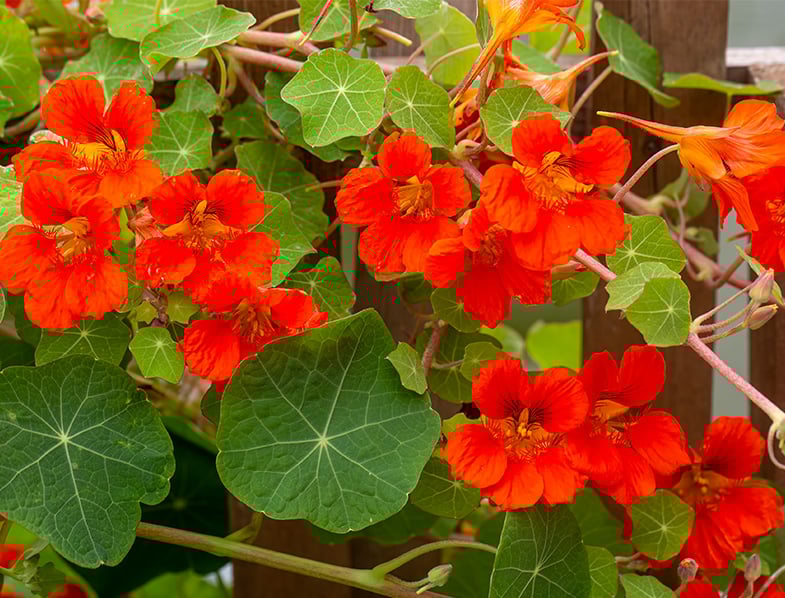
Nasturtium Features: An Overview
- Nasturtium is an annual flower that can grow up to 6 to 12 inches (15-30 cm) or 1 to 3 feet (30-90 cm) high and 12 to 18 inches (30-45 cm) wide.
- These flowers can grow as either vinelike or compact bushy plants, featuring nearly round leaves and longspurs that grow 5-petal bright orange and yellow flowers at their ends.
- The blooming season of Nasturtiums starts in July and continues until late September.
- Although some parts of the Nasturtium flower are edible and packed with health benefits, the seeds are considered toxic and should not be consumed. What’s more, there are also some precautions regarding ingesting large amounts of Nasturtium. But the good news is this flower is generally considered safe for pets.
Growing Nasturtium
Growing and caring for Nasturtium isn’t difficult. These flowers are effortless to care for, and they are one of those garden plants that can thrive even when neglected. As long as you provide them with their basic growing needs, caring for Nasturtium won’t give you any headaches. Thanks to the fact that they are low-maintenance, these flowers can be grown by novice and experienced gardeners too.
First things first, it’s essential to remember that these plants love growing in full sun. In fact, they need at least 6-8 hours of full sun daily to bloom and thrive. If you can find a spot in your garden that is sunny most of the day and gets partial shade in the afternoon, your Nasturtiums will be really happy.
Fertilizing your Nasturtiums is another essential thing to do to help them grow and bloom, especially if your soil is extremely poor. We recommend fertilizing your plants throughout summer using liquid fertilizer. This will ensure plenty of blooms. Avoid fertilizers with too much nitrogen because this can encourage more foliage than flowers.
Pruning is also necessary to help your Nasturtiums stay happy and healthy and encourage more abundant blooms. Once the flowers are spent, make sure to deadhead the plants to encourage more blossoms. Keep in mind that vinelike plants are also particularly vulnerable to getting leggy and messy looking, so some pruning is necessary to keep the plant’s appearance neat. Simply trim back the longest vines by a few inches. This will stimulate new growth, both leaves and flowers, and more branching.
Planting Nasturtium
Planting Nasturtium in your garden is an easy process. You need to keep in mind a few key things to ensure successful planting in terms of light, soil, and temperature requirements.
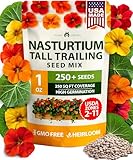
- 250 HIGH-QUALITY FLOWER SEEDS FOR QUICK BLOOMS – This pack includes 250 premium nasturtium seeds, germinating in just 7-14 days with blooms appearing within 8-10 weeks. These fast-growing, colorful flowers create a stunning garden display and are an excellent choice for both beginner and experienced gardeners.
- EASY-TO-GROW WITH MINIMAL CARE – Thrives in poor to moderately fertile soil and requires low to moderate watering, making it ideal for drought-prone areas. Prefers full sun but adapts to partial shade, ensuring vibrant flowers with minimal effort. Avoid over-fertilizing, as this can reduce blooming.
- NATURAL PEST CONTROL AND COMPANION PLANT – Acts as a natural pest deterrent, helping to repel aphids, whiteflies, and cabbage moths, making it a great companion for tomatoes, cucumbers, beans, and other crops. Provides a chemical-free way to protect your vegetable garden while enhancing its beauty.
- VERSATILE GROWTH HABIT FOR ANY SPACE – Grows in a semi-trailing habit, reaching 3-5 feet in length, making it perfect for hanging baskets, containers, trellises, or ground cover. Adds a vibrant touch to patios, balconies, and garden beds with bright red, orange, yellow, and cream-colored blooms.
- ATTRACTS POLLINATORS AND BENEFICIAL INSECTS – An excellent choice for encouraging hummingbirds, bees, and butterflies, which contribute to a healthier, more productive garden. Provides nectar and shelter for beneficial insects, supporting local ecosystems and promoting natural plant pollination.


- Nasturtium Seeds: Jewel Mixed Nasturtium, scientifically known as Tropaeolum nanum, is a compact variety of nasturtium, ideal for small gardens, containers, or borders.
- Appearance: This variety features vibrant, jewel-like flowers in shades of red, orange, yellow, and sometimes mahogany. The flowers are slightly smaller than those of T. majus but are just as striking.
- Growth Habit: Tropaeolum nanum grows in a bushy, dwarf form, typically reaching only about 12-18 inches in height, making it excellent for ground cover or in pots where space is limited.
- Edibility and Uses: Both the flowers and leaves are edible, often used to add color and a peppery flavor to salads. They are also rich in vitamin C and can be used for their ornamental purpose in culinary dishes.
- Quality: All Nasturtium seeds packaged by Seed Needs are intended for the current and the following growing seasons. All seeds are stored in a temperature controlled facility that is free of significant amounts of moisture.

- The Best Value - Organo Republic Nasturtium Seeds Pack contains 4 oz or 700 of Non-GMO heirloom nasturtium seeds. Grow vibrant Nasturtium(Tropaeolum) flower with our heirloom, organic nasturtium seeds, perfect for planting outdoors. These edible flower seeds are ideal for gardens, salads, and companion planting. Enjoy colorful blooms and lush trailing growth!
- Innovative Nasturtium Seeds Package - Organo Republic flower seeds come in a waterproof resealable seed bag protects nasturtium seeds from sunlight and moisture, allowing secure storage for successful planting now or later, ensuring freshness and high germination rates. The package features QR codes to online growing guide, making it easy for gardeners of all levels to grow nasturtium flowers. We prioritize sustainability to ensure environmental safety.
- High Germination Rate - Grow beautiful nasturtium flowers effortlessly, whether in indoor trays or your backyard garden. Our premium seeds boast a superior germination rate, rigorously tested to ensure successful growth year-round. Perfect for creating vibrant blooms in your own garden, these top-quality seeds are also a thoughtful gift for gardening enthusiasts.
- Easy to grow - Perfect for beginners and experienced gardeners, our nasturtium seed package includes detailed tips for success in any climate or soil type. Simply scan the QR codes on the seed packet to access an online growing guide and learn how to plant and care for nasturtium like a professional gardener.
- US Sourced Premium Nasturtium Seeds - We are sourcing our seeds only from the most trusted and sustainable domestic seed suppliers and farmers. We proudly test and package them in our Florida Boutique Family-Owned Facility to provide you with the best quality. Our nasturtium seeds for planting flowers undergo rigorous testing with a 90%+ germination rate. Sealed to last for up to 2 years, you can trust the freshness and viability of our flower seeds.
Last update on 2025-11-29 / Affiliate links / Images from Amazon Product Advertising API
Generally, it is best to plant your Nasturtiums from March to May outside, in the spots where they are to flower. But, before you choose the places in your outdoor space, consider that:
The plant needs plenty of sunlight most of the day to thrive and bloom. So, pick the sunniest spots in your garden.
Nasturtium needs well-draining soil to prevent root rot. So, improve soil drainage by mixing it with coarse sand and crusher fines to allow excess water to pass through.
These flowers can survive a light frost, especially with a little help from you, but can easily get damaged by freezing temperatures. So, if you live in an area with very cold winters, it’s best to plant your Nasturtium in pots that you can move indoors during the cold season.
Remember to choose a spot that is sheltered from winds.
Watering Nasturtium
It is essential to know just how much water to give your Nasturtium plants.
This flower has minimal watering needs. They only require regular watering, about once or twice a week. But, remember to keep your Nasturtium well-hydrated during dry periods. However, you should also pay a lot of attention not to overwater your flower. In other words, adapt the frequency of watering to the season and humidity in your area.
To ensure that you don’t overwater your Nasturtium, we recommend using the “soak and dry” watering method. This means that you should only water your Nasturtiums when the top few inches of the soil are completely dry. This will prevent soggy soil.
Propagating Nasturtium
If you want more Nasturtium flowers in your outdoor space, propagation is relatively easy with this plant. Nasturtium can be propagated via cuttings and seed. Keep in mind that in mild areas that provide the ideal conditions, Nasturtiums will self-seed, coming back year after year.
To propagate your Nasturtium from cuttings:
- Take a 3 inch (7cm) section of stem and remove all its lower leaves.
- Place the cuttings in moist perlite or sand and wait for about two to three weeks for new roots to grow.
To propagate your Nasturtium from seeds:
- Collect seeds when ripe and save them to use them the following year when the weather and soil get warmer.
- Soak the seeds in water the night before planting to speed germination.
- Place the seeds 1 inch (2,5 cm) deep at about 3 inches (8 cm) apart and wait for new plants to grow.

In Conclusion
Having Nasturtiums in your garden is a delight. These flowers will fill your outdoor space with bright and vivid colours and attract all types of pollinators that will also benefit their garden companions. Nasturtiums will also protect your other plants from pests. Plus, these flowers have plenty of edible purposes and health benefits.
Growing and caring for Nasturtiums is incredibly easy. They have minimal growing needs and can survive even extended periods of neglect. So, by growing Nasturtiums in your garden, you get plenty of benefits for minimum work.
Are you growing Nasturtiums? Let us know in the comment section!

1 Comment
I will try planting nasturtiums in my garden this year. I have a heated greenhouse 6 x 12 foot and I have all raised beds. most of my beds are 24 inch x 12 foot, 2 foot in height. My question is as follows, can I plant nasturtiums in hanging baskets around the garden or do I have to plant them in the garden soil ?
Dave