

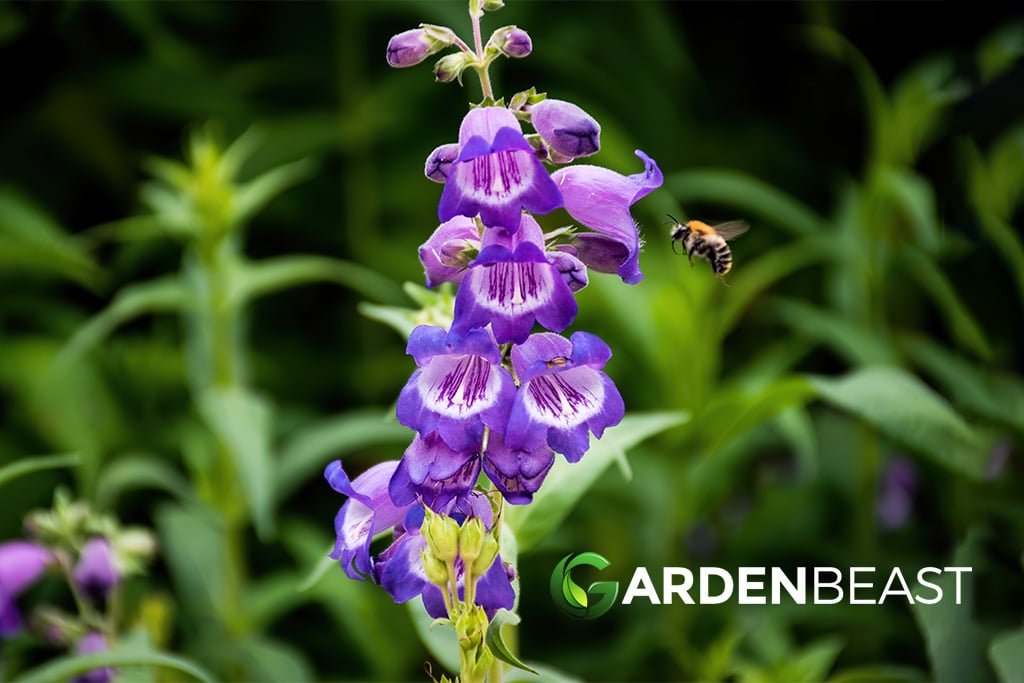
Penstemon is a large genus in the Plantaginaceae family that contains about 250 species of flowering plants. The curious-looking plants from this genus are commonly known as the Beardtongues and have beautiful and colorful flowers. They are deciduous or semi-evergreen perennials that grow natively in many regions of North America.
Penstemons are eye-catching ornamental plants that can add a vibrant dash of color to any garden or home. Depending on the species, Penstemons can come along with many particularities, such as their diversity, growing conditions, size, foliage, blooming period, and flower colors. The most popular cultivars of these flowering plants include Common Penstemon, ‘Dark Towers’ Penstemon, ‘Electric Blue’ Penstemon, Pine-leaf Penstemon, and ‘Husker Red’ Penstemon.
About Penstemon
- While most Penstemon plants are herbaceous perennials, some hybrid species are less hardy and better suited for growing as annual plants.
- Some Penstemon species and cultivars have gained the prestigious Award of Garden Merit from the Royal Horticultural Society.
- Thanks to their wide range of colors, Penstemon plants can make for excellent companions to other species of flowering plants including Lady’s Mantle, Lamb’s Ear, and Catmint.
- In North America, gardeners often use Penstemons in various decorations including xeriscape landscaping. However, you can easily grow the smaller species in adorable pots that match your interior decor.
- Their flowers produce large quantities of nectar that are highly attractive to several species of pollinators. They are a point of interest to bees, butterflies, and hummingbirds.
- Many Penstemon species were highly appreciated by Native Americans in the past. They were used often for culinary, medicinal, and cultural purposes like beverages for tea, remedies for toothache or snakebite, or blue paint for shoes and clothes.
- These flowering plants love lots of light and warmth, but they can also tolerate light shade and cooler temperatures. They bloom best locations with full sunlight.
- Penstemons can thrive in loamy, fertile, and well-draining soils that are poor in nutrients. They need fertilizers only once every year to boost their growth.

Penstemon Features: An Overview
- Although not very common within their range, you can usually find them growing in various habitats that range from open deserts to humid forests and even up to the alpine zone.
- Penstemons have a wide range of diversity and sizes. Depending on the species, they can reach from 6 inches to 8 feet (15 cm to 2.4 m) in height and 8 to 20 inches (20-51 cm) in width.
- The foliage of these plants is also variable, coming in different shapes, sizes, and colors. The glossy leaves grow oppositely and appear in numerous shades of green, blue-gray, or burgundy.
- Their blooming period is diverse from one species to another. Beardtongue plants usually bloom in spring or summer, but some species can produce flowers even in autumn.
- The most interesting and unique feature of this genus is the prominent infertile stamen known as staminode. It can appear in a wide variety of forms, but the most common type is a long and straight filament that extends to the mouth of the corolla.
- The staminodes on some species can be extremely long and hairy. Thanks to this peculiar feature, the flowers have an overall appearance of an open mouth with a fluffy tongue. This was the main inspiration for their common name Beardtongue.
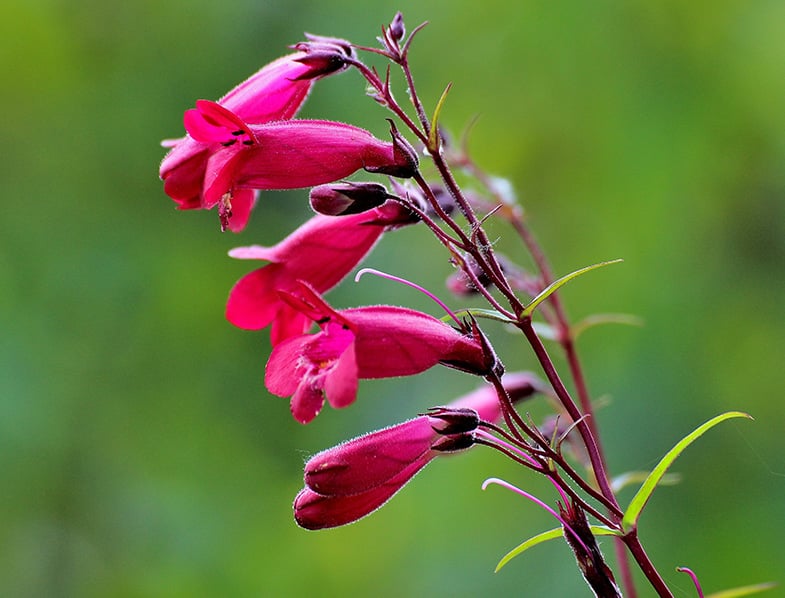
- What gives Penstemons all the credit is their peculiar, but stunning flowers. They are bright, tube-shaped, somehow two-lipped, and very nectar-abundant blooms that grow in long spires.
- Their blossoms have a rich color palette to choose their style from. They can be lovely shades of white, yellow, orange, red, pink, purple, and blue.
Growing Penstemon
What makes Beardtongues truly great ornamental houseplants is that gardeners find them very easy to grow and care for. These plants are tough perennials that can withstand even the most intense growing conditions and environments. But it is natural to want only what is best for your baby plants, so we are here to teach you how to spoil them without much effort on your part!
Penstemon plants grow at their best when they are exposed to full sunlight. For optimal blooming, you must place these plants in a location where they can receive at least six hours of bright and direct light. If you give them proper light conditions, your Beardtongues will reward you with beautiful flowers. You’ll also protect them from infections like powdery mildew.
Penstemons can be either prairie-growing or alpine species that can tolerate a wide range of temperatures. The alpine species are popular thanks to their frost-tolerant nature. So they are more suited for you if you live in a region with cooler temperatures or harsh winters. However, to display healthy growth and sporadical blooming, your plants will prefer slightly warmer temperatures that range from 60 to 70 °F (16-21 °C).
Penstemons are prone to several fungal infections, such as leaf spots, powdery mildew, or rust. In case of infection, the foliage will be the most affected part of your plants, so you will know immediately when something is wrong. You can control the fungal infections pretty easily by applying suitable fungicides as soon as you notice a weird look of the foliage.
Planting Penstemon
Before worrying too much about how and where to plant your Penstemons, you just have to find out the growing features of your particular plants. If you have species that grow pretty tall, you must plant them in a spacious location where they will have plenty of room to develop. If you grow dwarf species of Penstemon, smaller areas will work just fine and they will thrive as potted plants.
Whether you grow Penstemon plants outdoors or indoors, keep in mind that they require soil that has very good drainage. They are very adaptable and you can plant them in any type of soil that is fertile, but not so rich in organic matter or nutrients. If you plant them in rich soils, these plants tend to exhibit growth that is too tender.
- Follow directions and plant when instructions say to plant them then they will grow for you. If you do not follow instructions then do not complain when nothing grows. Learn to follow instructions.
- Cycle: Perennial, Light Requirements: Full Sun, Plant Height: 16-18″, Plant Spacing: 12-15, Color: Red
- Bloom Season - Late Spring, Blooms Early Summer, Other: Attracts bees, birds, & butterflies
- If you do not follow the growing instructions in full and they do not grow for you then do not complain. These seeds are ALWAYS fresh seed. You MUST follow instructions below especially if trying to grow anytime other than the Fall. Seeds need cold weather to wake from dormancy so follow directions or do not complain.
- Sowing: Direct sow in late fall, pressing into the surface of the soil since this seed needs light to germinate and cold weather then in spring they will grow. For spring planting, mix the Eaton's Penstemon seeds with moist sand and store in the refrigerator for 30-60 days before planting. Keep the soil lightly moist until germination. This seed can also be started indoors 6-8 weeks before planting in the spring.

- Planting Area: Penstemon spectabilis thrives in the western and southwestern US, tolerating hot temperatures and low rainfall.
- Use: Ideal for borders, rock gardens, or wildflower meadows, its tall flower spikes and vibrant blooms add vertical interest and color to landscapes.
- Planting: For spring planting, scatter seeds on loose, well-draining soil, press lightly without covering, and keep moist until germination. Full sun required.
- Planting Tips: In fall, sow seeds directly in the garden before frost, allowing natural cold stratification for spring germination. Ensure seed-to-soil contact.
- Attract Pollinators: The blooms attract hummingbirds, bees, and butterflies.


- VIBRANT & LONG-LASTING BLOOMS: These perennial wildflower seeds boast stunning, deep blue-violet flowers, adding color and elegance to your garden. They shaped like snapdragons and has sturdy 24 - 36 inch stems, giving you enough bloom spikes are also perfect for cutting and creating indoor floral arrangements, bringing nature's beauty indoors.
- WATER-EFFECIENT & DROUGHT-TOLERANT: Our Rocky Mountain Penstemon plant is perfect for drought-tolerant gardens. Once established, they require minimal water, thriving in full-sun environments and low-water gardens, making them ideal for xeriscaping or low-maintenance landscaping. Great for planting with other perennial flowers.
- COLD HARDY & ADAPTABLE: Hardy in USDA zones 3-6, penstemons are well-suited for colder climates and can survive harsh winters by reverting back to its insulated roots to maintaining its longevity. It thrives in rocky, sandy, or low-fertility soils, making it a great choice for challenging landscapes like slopes and xeriscaping beds.
- POLLINATOR & WILDLIFE FRIENDLY: Our Penstemon flower seeds produce flowers that attracts beneficial pollinators such as bees, butterflies, and hummingbirds, supporting local habitats and promoting a healthy wildlife-friendly garden.
- LOW MAINTENANCE & EASY TO GROW: These beardtongue penstemon live plants are self-sowing. Plant them in late fall with a sow rate of 2 oz per 1,000 square feet or 5 lbs per acre and spacing of 16-20 inches, then the cold winter conditions should break seed dormancy. Once germinated within 30 days, the plant thrives offering beautiful blooms and benefits to your garden.
Last update on 2025-11-08 / Affiliate links / Images from Amazon Product Advertising API
Avoid planting Penstemons in wet clay soils because they are not so compatible with it and can develop root rot with time. If you want to keep your babies inside, use containers with drainage holes at the bottom and potting mixes for flowering plants. Make sure you leave the top of the rootball just above the growing medium to avoid burying the crown.
Penstemons will benefit from regular fertilizing with an organic or natural product. It is suggested to feed your plants with a general-purpose fertilizer that is rich in minerals and phosphorus, but low in nitrogen, once a year in spring or autumn.
To promote a long season of blooming, you can spoil your Penstemons with a little extra attention. It is a simple process and usually does not require too much time because all you have to do is to remove all the spent flowers. If you want to give your plants a nice refresh, cut off any damaged or dead leaves to ensure new growth.
It is recommended to prune your Beardtongues once a year. Otherwise, the plants can become leggy and woody. Make sure you trim your plants once the winter weather is over, somewhere in early spring. When new shoots appear at the base of your plants, you must also remove the old flower spikes to make room for new blooming.
Watering Penstemon
In general, Penstemons are relatively drought-tolerant for short periods, when they are grown in normal environmental conditions. These plants will need your attention only when they are newly planted and need some time to settle in.
During the hot and dry summer months, Penstemons will require more frequent watering than usual. In winter or cooler temperatures, they can do just fine without regular watering. If you live in regions with abundant rainfalls, these plants may not need extra watering at all.
Penstemons are susceptible to root rot, so you must be very careful not to keep their soil soggy or over-water them. Make sure you check their soil in-between waterings and provide with water only when it has dried out completely.
Propagating Penstemon
Because not all species of Penstemons are very hardy, a harsh winter could kill your plants and leave you gloomy and disappointed. Therefore, it is always better to propagate these beauties each year to make sure you do not lose them forever. Or if you want them to be a nice surprise for your family or friends on a special occasion!
You can propagate penstemons through many different methods such as seed, layering, or division, but the most effective one is by cuttings. When using softwood cuttings, you will have reliable young plants that will grow healthy and happy just like the mother plants. The cuttings can be taken during the growing season, but those taken earlier in the year need bottom heat.

Look for non-blooming stems and cut about 4-5 inches (10-12 cm) just below a leaf node using a sharp and sterilized knife. Remove the bottom leaves and some of the above to reduce leaf surface and moisture loss. Dip the cuttings in rooting hormone and plant them in a container filled with a mixture of equal parts of perlite and compost.
You can plant the cuttings together only as long as they do not touch their leaves. If you protect the cuttings from frost, provide good ventilation, and water them once a week, they will develop a healthy root system and flower until next spring.
In Conclusion
Penstemons have stolen many gardeners’ hearts with their easy-going style and magnetic appearance. Not only are these plants one of a kind, but they also come in various sizes, shapes, and colors. And with so many beauties to choose from, the odds to find the perfect specimen are obviously in your favor!
Are you growing Beardtongues? Share your experience in the comments below!
