


We’ve all seen and admired at least one of those monumental carvings called totem poles. They are, without a doubt, a superb and eye-catching piece of art and play a big role in the Native American culture. But what if we told you that you can bring one of these sculptures into your home?
There is one cactus that resembles the features of totem poles and is more than eager to join your cacti collection! And what gardener does not prefer a special plant once in a while?
Pachycereus Schottii f. Monstrosus, commonly known as the Totem Pole cactus, Totem cactus, or Monstrous Whisker cactus, is an abnormal-growing species of cacti in the Cactaceae family.
Totem Pole cacti are native to desert regions of north-western Mexico and the Baja California peninsula, but some species can also be found in southern Arizona. They are growing in colonies on rocky hillsides, alluvial plains, and desert riparians.
Totem Pole cacti have a way to get under your skin and it is pretty hard to resist them. They can be used as ornamental houseplants both indoors and outdoors. With their alluring shapes and easy-to-grow style, these cacti will surely hunt your thoughts and steal your heart eternally.
Are you ready to learn more about growing Totem Pole cacti? Keep reading our guide for more info about these friendly giants.
About Totem Pole Cactus
- In their natural habitat, Totem Pole cacti can preserve moisture due to the curves and folds of their skin. Like most cacti, they are tolerant of drought for long periods.
- When they are provided with plenty of bright and direct sunlight, these cacti will show the most vigorous and healthy growth possible. If the sun is too harsh for long periods, they will start to bend and even die off.
- Totem Pole cacti do best in warm and dry environments. They need extra protection during periods with cooler temperatures and winter.
- These cacti will have a great time in rich, sandy soil that has good drainage. They are nutrient-lovers that will benefit from monthly fertilizing and regular soil changing.
- The only known enemies of Totem Pole cacti are over-watering and root rot. Generally, they are care-free and unbothered by pests.
- There is no scientific evidence to sustain the toxicity of their flowers or fruits, so they can be grown without worries near curious pets and children.
- They can make for an excellent companion to other desert plants or species of succulents with similar growing requirements.
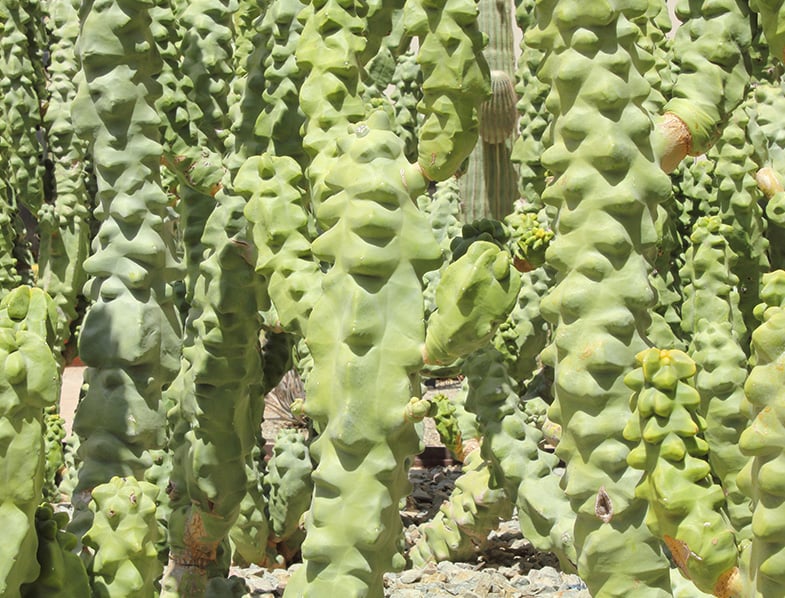
Totem Pole Cactus Features: An Overview
- They belong to the Pachycereus genus that contains about 9 to 12 species of tall cacti. The most cultivated Totem Pole cacti are P. Marginatus, P. Pecten-Aboriginum, P. Pringlei, and P. Schotti.
- Genetically, these cacti are stable mutations that come in various shapes and sizes. They can be grown both indoors and outdoors, but they require plenty of space.
- Totem Pole cacti grow at a very slow pace, but they can reach between 7 and 10 feet (2-3 m) in height and about 4 to 5 inches (10-12 cm) in diameter. However, some specimens can grow up to 20 feet (6 m) tall.
- They present huge, ascending, slender, and irregular-shaped stems with branched base. As mentioned above, the overall appearance is similar to a totem pole.
- The smooth surface of the stems is slightly covered by knobby tubercle-like swellings. Very few specimens present any bristles or spines at all.
- Totem Pole cacti produce insignificant areoles and exhibit light pink bloomings that are rarely observed. This cactus doesn’t really produce seeds.
- These cacti bloom during the night in late spring. Their flowers open at sunset and close up by mid-morning.
- They bear an egg-shaped and red fruit that has a red pulp within. The fruits collected from these cacti are edible.
Growing Totem Pole Cactus
Totem Pole cacti are one of a kind species! They are so low-maintenance that they can still thrive even with a forgetful or distant owner. The only thing you should worry about is the planting location. Once these cacti have settled in their new growing environment, they will be your lifetime companion for decades.
They are sun-loving desert cacti that will benefit from bright and direct sunlight all day. When growing Totem Pole cacti indoors, find a location where they can receive plenty of light, such as a south-facing window or any other bright place from your house. Make sure that your cacti are exposed to proper light conditions, as partial sunlight or only a few hours of it will not be enough. Outdoors, you can plant your cacti in a sunny spot to provide them with direct sunlight daily. They will grow better than other cacti or succulents in harsh conditions.
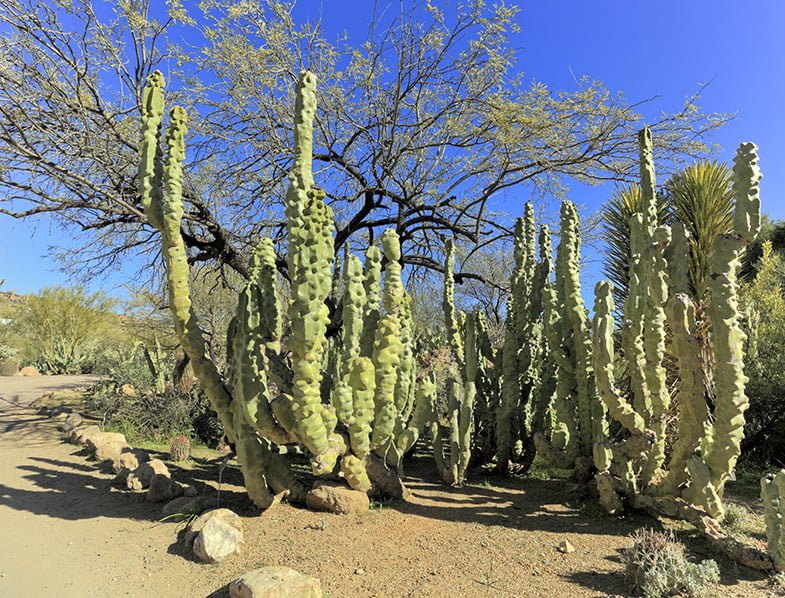
Totem Pole cacti do best in warm temperatures that rise above 70 °F (21 °C) and even in extreme heat. But be careful once the cooler temperatures of winter start to make their presence known! They cannot handle freezy conditions well, so you should move your cacti inside when the warm period has ended. These cacti are known to quite withstand temperatures that drop to 24 °F (-4 °C) but will be very hard for them to keep themselves vigorous and alive in these conditions.
Planting Totem Pole Cacti
In their natural habitat, Totem Pole cacti grow in sandy and pebbly soil. For optimal growth, it is suggested you plant your cacti in porous, sandy, and well-draining soil that is rich in organic matter. They need lots of nutrients, so their soil must be changed once every two years. You can also prepare your own potting soil by combining equal parts of perlite, cactus mix, and coarse sand.
If you want to maintain your Totem Pole cacti in good shape, you will need to provide them with fertilizers regularly. Feed them with a good-quality cacti fertilizer once a month to ensure healthy growth and, why not, a possible blooming.

- Live Golden Pothos Totem Pole Plant – Features lush green and golden variegated leaves, trained to climb a sturdy totem pole, adding a vertical, tropical statement to any space
- Easy-Care, Low-Maintenance Houseplant – Thrives in low to bright indirect light, requires minimal watering, and is perfect for beginners and busy plant owners
- Air-Purifying Climbing Vine – Naturally filters toxins from the air, improving indoor air quality while enhancing homes, offices, and workspaces
- Versatile Indoor Décor Plant – This 6-inch potted Golden Pothos is perfect for desks, countertops, shelves, or as a floor plant, bringing a natural jungle aesthetic to any room
- Fast-Growing & Great Gift Idea – A resilient, beginner-friendly plant that makes an excellent housewarming, birthday, or office gift for plant lovers and décor enthusiasts


- 【What You Get】Comes with two coir totem pole and a 65 feet garden twist tie. Easily tie up your plant with a natural, easy to remove and non-damaging material, which blended in nicely with your plants.
- 【Premium Material】This coir totem pole is made of natural fiber material extracted from the husk of coconut, which is perfect for the growing plants to attach new air roots and help plants maintain the water and nutrition for growing better. Interior pole is made of PVC instead of metal so you wouldn’t need to worry about rusting
- 【Sturdy Support】The sturdy sharpened wood tip allows it to insert into soil easily, providing strong support for the plant extension. The rope wrapped around the pole tighten the coir moss firmly for long-last use
- 【Widely Used】Extra support is essential for climbing plants and vines when growing in pots and containers. These house plant poles are great option to tie up your monstera deliciosa, monstera adansonii, pothos, philodendron or Swiss Cheese Plant.
- 【Variable Size】24” total height, 15”height per each coir totem pole includes 5” wood stick, it’s in two pieces so you can use it as one long pole or two smaller ones.

- 🌵 Unique Shape: The Boobie Cactus has round, protruding lobes that create a distinct and eye-catching appearance, making it a standout addition to any succulent or cactus collection.
- 💧 Low Watering Requirements: The Boobie Cactus is highly drought-tolerant and requires minimal watering, making it a low-maintenance plant that thrives with infrequent moisture.
- 🏠 Indoor and Outdoor Suitable: The Boobie Cactus thrives in both indoor and outdoor environments. It prefers well-draining soil and bright, indirect light, making it versatile and adaptable for various settings, from home decor to garden spaces.
- 🌱 Beginner-Friendly: The Boobie Cactus is a hardy and resilient plant that is easy to care for, making it an excellent choice for novice gardeners or anyone new to growing cacti and succulents.
- 🌞 California-Native Greenhouse: Grown by 1am Succulents, a California-registered nursery, our plants are carefully acclimated to thrive in various environments, ensuring they adapt well and maintain long-term health and beauty in your home or garden.
Last update on 2025-11-26 / Affiliate links / Images from Amazon Product Advertising API
Due to their slow-growing habit, these cacti will not demand repotting for several years. When you notice that your Totem Pole cactus has started to outgrow its container, this is the ideal time to take action. Look for a pot that is one size larger than the current one and transplant your cactus carefully. The pot must be filled with fresh potting soil and skip watering until your plant has settled in. After about one week, they should be ready for the usual care.
If you are the lucky owner of one Totem Pole cactus, you will not need to watch out for any intruders. They are usually unbothered and pest-free, making them easier to grow than other cacti. Apparently, the only thing that can put these cacti life in danger is root rot.
Watering Totem Pole Cactus
Totem Pole cacti are drought-resistant and we know you might be tempted to ignore them constantly based on this detail. But this does not mean that your cacti do not need your attention! As a general rule, young cacti will need more water than the larger and more mature ones. Moreover, the frequency of watering a Totem Pole cactus will surely vary according to the temperature values or seasons.
During the summer months, an established Totem Pole cactus will do just fine if it receives water once every two or three weeks. The younger specimens, however, will demand a little more water, but will not appreciate waterlogging or soggy conditions. Keep in mind that is always better to provide your Totem Pole cacti with less water than over-watering them.
Their growing medium will also determine how much water your Totem Pole cacti may need. If you grow them in-ground outdoors, these cacti will benefit from a deep soak followed by good drainage. When the weather gets hotter, your plants will need more water than usual. For potted Totem Pole cacti, provide them with water once the top inch (2.5 cm) of soil has dried out. In winter, you can water them monthly or even skip watering.
Like most cacti, Totem Poles require very low levels of humidity. You can maintain the air around your plants dry using a dehumidifier or by placing them in a room with air vents.

Propagating Totem Pole Cactus
Do you want to simulate the Totem Pole cacti colonies in their natural habitat, add more to your collection, or gift them to your cacti-loving friends? Say no more! Totem Pole cacti can be easily propagated through stem cuttings, as they do not bloom or seed too often.
The cuttings should have at least 3 inches (7.6 cm) and must be taken at an angle with a sharp and sterilized knife. Make sure you choose stems that contain one or two healthy areolas and allow the cuttings to dry in a shaded location. Once the callus has formed, plant your cuttings in fresh potting mix and wait about a week before moisturizing it.
When propagating Totem Pole cacti, you will notice the development of a healthy root system after 2-4 weeks. Once you feel some resistance when gently pulling the cuttings, move your baby cacti in a place with bright, indirect light and care for them as usual.
In Conclusion
With their low-maintenance feature and peculiar appearance, Totem Pole cacti are a must-have. Adding one to your collection is a great idea, especially now that you know everything about growing and caring for Totem Pole cacti. With proper watering and light conditions, they will be your weird-looking friend for a long time. But be careful not to stare at them for too long, as they might begin to make grumpy or funny faces at you!
