


Locust trees are charming flowering trees and bushes that are known to grow extraordinarily quickly. These trees belong to the Fabaceae family and usually fall within one of two genera — Gleditsia and Robinia. Locust trees are native to North America, and can perform extraordinarily well in home gardens, especially in the Eastern states.
Although locust trees are famous for being fast-growing, they have long lifespans of approximately one hundred years. You can most easily identify a locust tree by looking for its graceful pinnate leaves, which sway from long branches with thick thorns — if, that is, you don’t recognize a locust tree by its beautifully-scented, drooping, flowers first.
The honey locust tree (Gleditsia triacanthos) and black locust tree (Robinia pseudoacacia) are the most well-known members of this tree family, but there are others, as well. Each locust tree is uniquely attractive, and will make a wonderful addition to any large garden or public park.
About Locust Trees
- The locust tree family is a small one — and only a select few locust trees perform well in gardens. These include the honey locust tree, black locust tree, water locust tree, Frisia locust tree, the aptly-named twisty baby, and the New Mexico locust. Another locust tree that makes a wonderful addition to almost any garden is the carob tree, also called the old world locust tree (Ceratonia siliqua).
- No, locust trees do not attract locusts! These trees, in fact, got their name because the pods of the carob tree, one type of locust tree, were believed to resemble lobsters. The Latin “locusta” can mean “lobster” as well as “locust” — solving a mystery many people have wondered about!
- The family locust trees belong to, Fabaceae, is better known as the legume, bean, or pea family of flowering plants. Does that mean that parts of the locust trees you may want to grow in your garden or find at a local park are also edible? Indeed, it does! The young and fresh pods of the honey locust can be eaten after cooking them. The mature and dried seeds, which are especially fragrant, can be ground up and may be used in cooking. The flowers of the black locust are edible, meanwhile. Exciting!
- Due to the great variation among different species of locust trees, not all of these plants thrive in the same conditions. Honey locust trees (Gleditsia triacanthos) do well with lots of bright, direct, sunlight, and perform well in acidic, neutral and alkaline soil types. Black locust trees (Robinia pseudoacacia) thrive in similar conditions but cope well with dry conditions while being under severe threat in case of flooding. The smaller twisty baby dwarf trees (Robinia pseudoacacia ‘Lace Lady’) require partial shade but thrive in all soil types.
- It is easiest to propagate a honey locust tree through cuttings, but growing them from seed is also fairly simple. Owing to the tough seed coat, it is important to cover them in hot water (ideal temperature range: 80° to 88 °C — nearly, but not quite, boiling). Allow the seeds to soak until they swell, and then transplant them to a small pot with moist soil to allow them to sprout.
- Locust trees can grow an impressive three to four feet per season! Honey locust trees can, when fully-grown, reach heights of 30 to 70′ and will display an equally impressive spread.
- Locust tree wood, a hard wood, is beautiful and supremely durable, making the lumber an excellent choice for furniture and fence posts, among other applications. Black locust tree lumber contains a rot-resistant compound that makes it especially valuable.
- Gardeners who would love to enjoy their very own locust tree but who lack the space for tall and wide trees may opt for twisty babies, which grow up to 8-10′ tall and have a spread of up to 5′. The umbrella locust tree (Robinia pseudoacacia “Umbraculifera”), a dwarf locust tree, can reach a height of around 20′ and is, with its beautiful umbrella-like canopy, another excellent choice.

Honey Locust Tree Features: An Overview
- The honey locust tree (Gleditsia triacanthos), also known as the thorny locust, is a robust deciduous tree with gray bark from the Fabaceae family. Honey locusts thrive in diverse environments, in full sunlight.
- Honey locust trees reach heights of between 66 and 100′ and feature strong taproots that can extend up to 20′ below ground, and that branch out widely. They should be planted at least 20′ away from your home.
- Honey locust tree trunks are covered in thorny branches with sharp, long, purple barbs that measure between 4 and 8”. You don’t have to wonder how these trees earned the nickname “thorny locust”! Would you like a honey locust tree, sans thorns? Look for species marked with the addition “inermis”, literally meaning “harmless”, but essentially translating to “thornless”.
- This is a tree with arching, alternating pinnately compound leaves that originate from single points, flowing beautifully. The young spring leaves emerge in a light, bright, green, becoming darker through the season before morphing into a deep, warm, yellow during the fall.
- Honey locust trees are further characterized by slender and elegant long branches.
- Honey locust trees produce small green-yellow flowers that smell more attractive than they look and that can appear as single strands or in small clusters. Gardeners can expect to enjoy the fragrant perfume of these flowers in late spring through early summer.
- The long pods these trees produce are arguably their most aesthetically-pleasing feature. These deep purple-brown pods are generally between 6 and 18″ long and up to 1.5″ wide. They can stay on the tree for as long as six months, between September and February, and will delightfully and gently dance in the wind. Once the pods drop, they can be used to propagate new trees and even eaten. The further south you are, the more fruit your honey locust tree will produce, but you can expect a “bumper crop” only once every two to three years.
- The honey locust tree is thought to have originated in Canada and China, though it is also considered native to the United States, where it is popular in states that include Georgia, Iowa, Pennsylvania, and Texas. These trees can thrive in Europe as well, including in the UK.
- Honey locust trees can form a central focal point in your garden, as they are impressive on their own. However, they also perform well in clusters with other trees.
Growing Honey Locust Trees
Honey locust trees are hardy plants that can thrive in a wide variety of soil types, including alkaline, acidic, neutral, and indeed even salty soil. These trees can withstand mild drought as well as some minor flooding. Young plants will grow with relative ease indoors, in pots with moist soil with adequate drainage.
These trees display a definite preference for full sun, but can survive in areas with partial shade. They will, however, fail to thrive if placed in areas with dense shade — other types of locust trees, like Frisia and twisty baby, do better in these conditions, however. The trees will themselves create partial shade, due to the shape and density of their leaves, which makes for a very pleasant experience in the garden and will impact the types of plants you will want to grow in the vicinity.
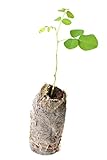
- Not Shipping to ID, OR & WA due to Japanese Beetle Quarantine
- Keep in mind our starter plugs do not quote a minimum plant size. Your plant will be small.
- Also not shipping to Massachusetts.
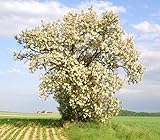
- BEAUTIFUL BLACK LOCUST: It's fragrant white flowers are beloved by bees. Attractive wood is popular as lumber.
- EASY TO GROW: Growing instructions included. Seeds come ready to plant.
- CZ GRAIN GUARANTEE: Get the highest quality seeds and all of our seeds are Non-GMO. Pick from our large variety of heirloom or organic seeds! Satisfaction Guaranteed
- GROW OR GIFT: Fresh vegetable seeds are a great gift for anyone from kids, parents, grandparents. Great STEM project. Its fun and easy to grow your own food.


- 🌼 Lifelike Artificial Plants: FSOHOI 6 feet locust faux tree features realistic leaves and blooms, bringing a touch of nature's beauty to your space without the need for upkeep. Large locust fake plant with white planter, is also filled with colored pebbles to make the faux plants look realstic & fuller. No matter where tall indoor tree is placed in your home, it is perfect
- 🌼 Adjustable Design & Easy Assembly: Locust artificial plants indoor built with sturdy inner metal wires, its branches and leaves are fully bendable for personalized shaping. Simply follow the labeled steps to assemble your silk locust tree in minutes. Adjust the leaves to create a uniquely full silhouette
- 🌼 No Maintenance: Unlike real plants, locust faux plants indoor sophora tree requires no watering, pruning, or fertilizing. Just enjoy its lush look all year round with zero hassle. When the leaves get dusty, simply wipe them with a damp cloth, and they'll be as fresh and vibrant as new in no time
- 🌼 Versatile Placement: Locust fake tree suitable for enhancing living rooms, offices, bedrooms, living room, kitchen, front door, home hallway, indoor yard, garden, farmhouse, or any area where you want to add a natural element. Faux locust tree fits well in various indoor decors
- 🌼 Breathe Timeless Serenity into Your Space: FSOHOI locust artificial tree with delicate white blooms, symbolizes peace and elegant renewal, great for gifting. Lush green foliage and white flowers creates a serene and natural ambiance, perfect for adding a touch of nature to any space
Last update on 2025-11-24 / Affiliate links / Images from Amazon Product Advertising API
While honey locust trees can do well in temperate as well as hotter climates, it is important to keep in mind that they risk dying if they are repeatedly exposed to temperatures below freezing — these trees far prefer temperatures above 10 °C and thrive in climates with hotter summers. They can, however, be grown as indoor plants as well, in which case regular pruning will limit their size.
In terms of fertilizer, honey locust trees can benefit from a balanced granular or liquid fertilization regime when they are newly planted outside, or gardeners may opt for organic fertilizer. However, past their first year, these trees will not require artificial fertilization in most conditions.
Watering Honey Locust Trees
These trees are very versatile in that they are able to cope with mild drought as well as some flooding. When young and newly planted outdoors, however, they do require some additional care. Honey locust trees need to be watered immediately after they are planted outside.
Following this initial step, weekly watering sessions will help your young honey locust tree grow during its first year. The frequency with which you need to water your young honey locust tree will depend on the rainfall your area receives — an hour-long period of precipitation will provide enough water to warrant a decision not to actively water the tree yourself that week.
Honey locust tree roots are hardy and resistant to root rot. While fungi are prone to latch onto the deep and wide root systems that these trees develop over time, they exist in symbiosis with the roots and do not harm them.
Propagating Honey Locust Trees
Growing a honey locust tree from seed is a labor-intensive process, but as long as you follow the required steps carefully, it is very possible to achieve success. To germinate a honey locust seed, you will need a quart-sized container with drainage holes and a plastic covering. Should you be planning to plant the tree outside later, and your garden soil has high quality, using the soil from your garden is recommended. You will also need a tray to catch the water that drains from the pot.
To prepare the seeds for sprouting, you will need to bring water close to a boil, but not quite — similar to if you were making a nice cup of tea. Prepare a water volume around four times the volume of the seeds you will be germinating.
In a waterproof container, pour this water, which should have a temperature between 80° and 88 °C, over the seeds. Keep a close eye on the seeds as they soak and consequently swell, during which point the water will fully have cooled. Once the seeds reach around three times the size they had in their dry state, you can safely remove them.

The seeds can now be planted in your container with drainage holes (a punctured milk carton is ideal) which you should have filled with high-quality soil and watered thoroughly. The soil should be moist but not soaking wet. When spaced widely apart, more than one seed can be planted in the same container without any problems.
Next, place an appropriately-sized plastic covering, such as a plastic bag from a grocery store or large Ziploc bag, over the container, making sure that the fit is snug around the edges but your seeds have plenty of space to sprout vertically. Place the container in a sun-exposed location, but take care to keep your seeds away from radiators.
All you have to do now is wait for your seeds to sprout — a process that takes two to three weeks! Check in often to see if the soil has turned dry, in which case you will need to water the soil again. Remember, you are aiming for moist, not wet, soil!
Gardeners who are planning to keep growing their honey locust seedling indoors, in a pot, will need to use fertilizer to encourage it to thrive. If you are planning to transplant your honey locust tree outside as soon as possible, that can be done in the fall. Dig a hole of twice the diameter as the pot the seedling was in, and equally deep as the pot. Gently place the seedling and cover it with garden soil, while tapping to harden the soil.
In Conclusion
Locust trees are among the most beautiful and versatile species any gardener can enjoy. The honey locust tree does not have the most impressive flowers, but what they lose in beauty, they more than make up for in fragrance. When cared for well in their youth, these trees can grow to amazing heights and provide many years of enjoyment.

1 Comment
Hi I have grown about 12 seeds of Honey Locust from a seed pod I got off the ground in a Bunnings car park! I have only a small garden but would like to have at least one tree which I am hoping to maintain at a reasonable height. Im a bit concerned about the root system. Is it very invasive? Our water pipes are not terribly deep and I just wonder. We do have quite a large magnolia tree about 8 feet tall on a very small patch of garden and I was hoping to grow a Honey locust to about the same height but on the opposite side of the garden. Thank you so much jan